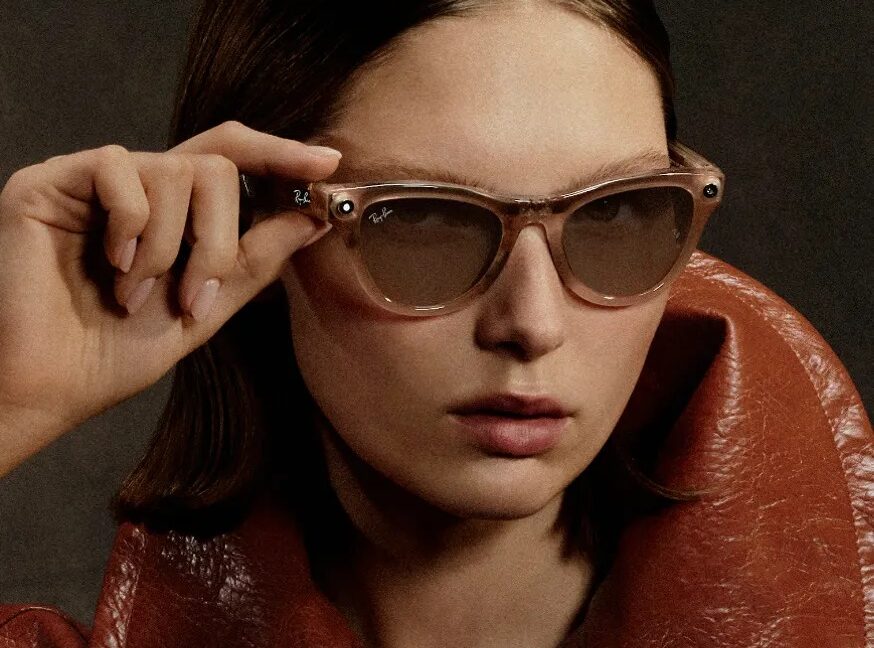
In February, numerous workers from a company that Meta contracted to perform data annotation for Ray-Ban Meta reported viewing sensitive, embarrassing, and seemingly private footage recorded by the smart glasses. About two months later, Meta ended its contract with the firm.
According to a BBC report today, “less than two months” after a report from Swedish newspapers Svenska Dagbladet and Göteborgs-Posten and Kenya-based freelance journalist Naipanoi Lepapa came out featuring Sama workers complaining about watching explicit footage shot from Ray-Ban Metas, “Meta ended its contract with Sama.”
Sama is a Kenya-headquartered firm that Meta contracted to perform data annotation work, including working with video, image, and speech annotation for Meta’s AI systems for Ray-Ban Metas. Sama claims that Meta’s cancellation of the contract affected 1,108 workers.
A Meta spokesperson told BBC that Meta “decided to end our work with Sama because they don’t meet our standards.” Ars Technica reached out to Meta asking how, specifically, Sama failed to meet Meta’s expectations and will update this article if we hear back. Ars has also reached out to Sama.
In a statement shared with BBC, Sama claimed that it was never notified of any failure to meet Meta’s standards.
BBC reported that Sama workers believe Meta ended the contract because workers spoke out about seeing Ray-Ban Meta-shot footage of people performing personal acts, like changing their clothes, having sex, and using the toilet.
In a statement shared with Ars, Sama said:
We do not comment on specific client processes or decisions, however, we can confirm that the engagement with Meta is ending. Sama has consistently met the operational, security, and quality standards required across all of our client engagements, and we stand behind the integrity of our work. Our focus is on supporting our employees during this transition while continuing to deliver for our clients.
In February’s report, an anonymous Sama employee was quoted as saying, per a machine translation, they “are just expected to carry out the work” even when viewing private footage.
After Sama workers told journalists that they had watched private footage that appeared to be recorded unbeknownst to glasses owners, Meta responded by halting business with Sama, a spokesperson said, per BBC’s report today.
“Last month, we paused our work with Sama while we looked into these claims,” the spokesperson said. “We take them seriously. Photos and videos are private to users. Humans review AI content to improve product performance, for which we get clear user consent.”
BBC said that Meta has not responded to allegations that it cut ties with Sama because the workers spoke out.
Ray-Ban Meta scrutinized after Sama workers’ claims
In response to the February report, Meta confirmed that it sometimes shares content that glasses owners provide to the Meta AI generative AI chatbot with contractors so that the contractors can review data with “the purpose of improving people’s experience.” The company said that such “data is first filtered to protect people’s privacy,” such as by blurring out faces in pictures.
Ray-Ban Metas show a light when taking photos or recording a video; however, Sama workers said in February that it appeared that some users remained unaware that their glasses were recording sometimes.
“People can record themselves in the wrong way and not even know what they are recording,” an anonymous employee was quoted as saying, per a machine translation of the Swedish newspapers.
Since Sama workers’ claims became public, Ray-Ban Meta glasses have faced extra scrutiny. In March, a class-action complaint was filed in the US District Court for the Northern District of California, San Francisco Division [PDF] against Meta and Luxottica of America, a subsidiary of EssilorLuxottica, which is Ray-Ban’s parent company. The complaint accuses Meta of breaking state consumer protection laws and seeks damages, punitive penalties, and an injunction requiring Meta to make changes in order “to prevent or mitigate the risk of the consumer deception and violations of law.”
That same month, the UK Information Commissioner’s Office (ICO) said it would send Meta a letter about the Sama workers’ “concerning” reports. The data watchdog told BBC at the time that “devices processing personal data, including smart glasses, should put users in control and provide appropriate transparency.”
“Service providers must clearly explain what data is collected and how it is used,” the ICO’s statement said.
The office of Kenya’s Data Protection Commissioner said in March that it was investigating “privacy concerns raised in relation to the Ray-Ban Meta glasses and the processing of personally identifiable information for the training of Meta AI.”